Photojournalist Peter Dench


  • Photojournalist Peter Dench captured the mood of the country in the wake of Brexit on journey along the A1
  • In his exhibition called ‘Britain on the verge’ he pictured characters, sights and locations on his 410 mile trip 
  • He said he found ‘there’s an optimism for the future…British people are very stoic and have a can do attitude’ 

It is the longest road in the country, winding 410 miles between the capitals of England and Scotland.

Embarking on a visual tour of the A1 photojournalist Peter Dench wanted to capture the mood of the country as he made his way north from his home city of London.

His aim was to explore the idea of British identity in the wake of Brexit by picturing the characters, sights and locations he passed as he travelled to Edinburgh.

Speaking to MailOnline he said: ‘It was a snapshot from the nation to gauge how people were feeling…it’s called “Britain on the verge”.

Mr Dench’s journey began in St Paul’s where he pictured workers in Panyer Alley, with a red London bus in the background

Bill, 67, (left) and Spencer, 43 (right), both painters from London, aren’t worried about their jobs following the Brexit result

Photojournalist Peter Dench

In Corbyn’s north Islington constituency Mr Dench found a ‘Kick the Tories Out’ poster outside Highbury and Islington station

Photojournalist Peter Dench

19-year-old Ornella, of Congolese-Irish descent, is a Labour supporter and student studying Health and Human Sciences at City of Islington College

Matt, 20, from London, who is studying mathematics in Nottingham, holds a copy of The Revolutionary Communist Group newspaper, with the headline FIGHT RACISM! FIGHT IMPERIALISM!
Photojournalist Peter Dench

A young worshipper arrives for Friday prayer at the Holloway Mosque which can hold around 300 people

An elderly Arsenal fan of Italian descent carrying a Malta bag, pictured on the Holloway Road in north London

Photojournalist Peter Dench

Mark, 32, from Essex, selling fruit and vegetables, in north London – he said he’s optimistic about the future of his business

Photojournalist Mr Dench, who lives in Crouch End, said he wanted to meet the real people of the UK as he journeyed up the longest numbered road in the country.

He told MailOnline: ‘There’s a few reasons I wanted to do this. I am a photojournalist and I’m known for my work on Britishness. Ten years ago I produced a book on alcohol in Britain and I’ve also done one on Brits abroad.

‘Britain is my home country and I wanted to explore the idea of British identity post-Brexit.’

The project was also intended as an homage to Paul Graham who undertook a similar photographic expedition in 1981 and which encouraged Mr Dench to become a photographer when he was a young boy.

He said: ‘I wanted to find out what people expect from Brexit and what the country is going to do…I wanted to see whether they think it’s going to the dogs or whether it can be a success.

‘Generally I found there’s an optimism for the future. British people are very stoic and have a can do attitude. And while people were a little bit worried and uncertain about what was going to happen, they felt we needed to get on with it and make it work.

‘Brexit seems galvanising for people in a way…it’s made them want to work a bit harder to maintain their business and their lives. It’s quite a cleansing time for people, a time for them to take stock.’

Photojournalist Peter Dench

Challis Cooper, 20, and Arnold, 22, take a break at Baldock Extra Motorway Services, on their way to visit family in Great Yarmouth

Photojournalist Peter Dench

Matthew is the proprietor of the Rockery Centre in Bedfordshire which lies on the A1. Mr Dench pictured him standing his selection of giant animal sculptures, imported from Kenya, that are on sale for £6,000. Commenting on the business he said: ‘You’ve got to do something different. It’s the only way to survive’

The A1 starts near St Paul’s in London, passing the Brutalist architecture of the Barbican Complex.

In the capital Photojournalist Mr Dench captured slick city workers in their suits glued to their mobile phones.

Further north in London, he photographed young Muslims removing their shoes as they prepared to enter the The Holloway Mosque which can hold around 300 worshippers.

In Labour leader Jeremy Corbyn’s Islington North constituency he discovered Socialist Worker leaflets fluttering outside Highbury & Islington underground station.

He pictured Labour supporting 19-year-old Ornella, of Congolese-Irish descent, and Matt, 20, brandishing a copy of the Revolutionary Communist Group newspaper.

At another point on the Holloway road, Photojournalist Mr Dench met Mark, a 32-year-old fruit and vegetable seller from Essex.

Mark said his business had suffered because of price rises in transportation and import costs as a result of Brexit but remained optimistic his business would survive once things ‘settle down’.

Photojournalist Peter Dench

Don, 58, has worked on the railways for 40 years and now volunteers at Nene Valley Railway

Photojournalist Peter Dench

Jenny is also a volunteer at Nene Valley Railway, a preserved railway in Cambridgeshire

Photojournalist Peter Dench

Therapy manager Emma (stood far right) with employees at the Living Health Natural Therapies and Chiropractic Clinic in Grantham in Lincolnshire. The Grade II listed building was the birthplace of Margaret Thatcher

Photojournalist Peter Dench

Lithuanian couple Vilma and Darius were on their way to Sheffield after a stop-off at an OK Diner – they have been living in Britain for more than a decade and said they weren’t worried about their residency in the wake of the Brexit vote

Leaving London, Mr Dench met Challis, 20, and her 22-year-old boyfriend Arnold, at the Baldock Extra Motorway Services both dressed in camouflage tracksuits, socks and open-toe pool shoes. They were travelling north to visit family in Great Yarmouth.

He then bumped into Matthew, the proprietor of the Rockery Centre in Bedfordshire, which lies on the A1.

He was upbeat about his business. On sale for £6,000 was a selection of animal sculptures, specially imported from Kenya. ‘You’ve got to do something different,’ he said. ‘It’s the only way to survive.’

At the Nene Valley Railway, in Stibbington, Mr Dench met 58-year-old Don, who has worked on the railways for 40 years. He voted remain in the referendum and although a traditional Liberal/Labour supported, backed the Tories in the 2015 General Election to ‘keep UKIP out’.

Working his way up north Mr Dench met employees of the Living Health Chiropractic Clinic in a Grade-II listed building in Grantham that was once the childhood home of Margaret Thatcher.

Photojournalist Peter Dench

Babs sat under the menu board in BABS cafe where she has worked with her husband Pendleton for ’27 long years’ in Blyth, Nottinghamshire

Photojournalist Peter Dench

Just over a mile up the road, visitors to Flo’s cafe can read complimentary copies of the Truckstop News while a cardboard cut-out of the Queen watches over

Photojournalist Peter Dench

56-year-old Sikh, Vaz, hoses down the entrance of Sri Guru Kalgidhar Gurdwara before worshippers arrive on a Sunday in Doncaster, in South Yorkshire

Photojournalist Peter Dench

Dave, who lives in Doncaster, waits for friends at a Little Chef for a Sunday motorcycle ride

Paul in the Busy Bees Diner in Darrington, in West Yorkshire. He previously worked in the army and as a policeman before leaving to set up a gardening and property business

Photojournalist Peter Dench

Self-employed James, who works in concrete, holding the takeaway meal he bought from the Busy Bees Diner

Mr Dench then paid a visit to some of the A1’s service stops.

‘It’s here you find a hot bed of opinion’, he said. ‘You see diners, truckers and manual labourers coming and going.’

After a break at an OK DINER in Newark, in Nottinghamshire, the photojournalist met Lithuanian couple Vilma and Darius who said they weren’t worried about their residency in the UK despite the Brexit vote.

He then travelled to Blyth, in Nottinghamshire, where he found ‘Babs’ working tirelessly in her cafe – as she has done for the past 27 years with her husband.

In the Busy Bees diner in Darrington, West Yorkshire, Mr Dench bumped into Paul, who previously served in the army and as a policeman before setting up a gardening and property business. He also found self-employed James, clutching a box of takeaway food, who worked in concrete and said ‘business was good’.

Photojournalist Peter Dench

Mr Dench met 76-year-old Norman living in a retirement home for the over-40s in Darrington. One of six siblings, Norman recently lost a brother to bowel cancer, the same disease that cut short his father’s life aged only 37. It’s a disease Norman has survived. He put his own illness down to poor eating habits and having worked on the railways since he was 15

Photojournalist Peter Dench

Luna with her father Ryan, Katie, her great, great, great Aunt (far left), Susan, her great aunt (middle) and Sylvia, her great grandmother (second left), in Wetherby, West Yorkshire

Photojournalist Peter Dench

A father holds up his daughter as he poses for a selfie in front of the Angel of the North, designed by Antony Gormley

An exuberant Newcastle United supporter celebrates their title winning success in the city centre after they pipped Brighton to the league

Photojournalist Peter Dench

Dylan, pictured with his dog Rusty, on the Byker Estate where they live in Newcastle – the estate is a long, unbroken block of 620 maisonettes in the Byker district of the city that were designed by architect Ralph Erskine and constructed in the 1970s

Photojournalist Peter Dench

Richard, who works in the motor trade, with wife Helen, mother-in-law Iris and dogs Devon and Dragon on a walk through the Holy Island of Lindisfarne

As he journeyed into Scotland Mr Dench passed Adi’s Diner, which is just a few yards on the English side of the border

Photojournalist Peter Dench

A French couple, who arrived in Hull by ferry, take pictures next to the ‘Welcome to Scotland’ signpost

Photojournalist Peter Dench

A family on holiday from India at the northern end of the A1 at the junction of North Bridge and Princes Street, in Edinburgh

As he reached the end of the A1 in England Mr Dench photographed a father and his daughter taking a selfie in front of The Angel of The North, which is thought to be the largest sculpture of an angel in the world.

Entering Newcastle, he pictured a jubilant Magpies fan celebrating his team winning the Championship on the final day of the football season.

Moving into Scotland Mr Dench met a French couple taking a picture of the ‘Welcome to Scotland’ sign. He also pictured a Indian family on holiday outside a Scotsman newspaper billboard in Edinburgh.

Reflecting on his journey Mr Dench told MailOnline: ‘What I discovered was there isn’t so much a north/south divide as a London/everywhere else divide in Britain.

‘It’s not so much a resentment of London, it’s more a mistrust and envy that all decisions are made in London so people feel removed and detached from what’s happening.’

He added: ‘Driving the length of the A1, Britain doesn’t seem full. At times it feels lonely. But if the stoicism, drive and grit of the people I met is an accurate reflection of the nation, Britain is going to be okay.’

For more street photography
Read more: http://www.dailymail.co.uk/news/article-5170435/Life-A1.html#ixzz55mEzNDK1


Benefits of Professional Executive Headshots

Great article by New York corporate photographer  Michael Benabib

Working with executive headshots.

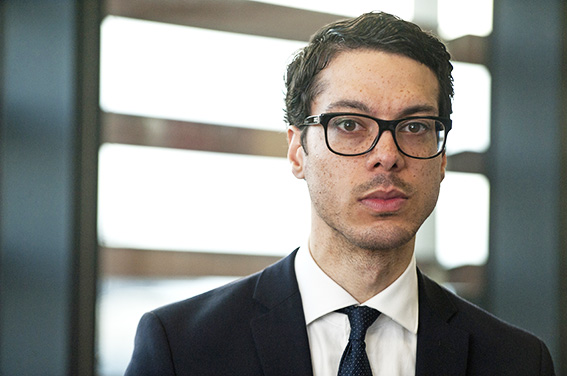
LinkedIn is the most lucrative social platform for corporate business and client acquisition. Your LinkedIn profile pic is the first impression to inspire engagement from your target market. Therefore, it’s imperative your corporate headshots and LinkedIn profile pic best represents your business and experience level.

The best example for the perfect LinkedIn profile pic is the corporate headshot of LinkedIn VP of Marketing Solutions, Penry Price. As the photographer working with LinkedIn executives, I’d like to share the elements for a perfect corporate headshot. Here are 7 tips to achieve a high-ranking profile pic:

executive headshots executive headshots executive headshots

1.    Hire a Professional.

Don’t squander your executive headshot image potential with a candid profile photo. Professionalism and individual value is perceived by the investment you are willing to invest in yourself; if you wouldn’t, why should anyone else? If you want to be perceived as an consummate professional, hire a professional.

2.    Arrive with an open mind.

Willingness to experiment is critical to any creative endeavor and yields optimal results. Therefore, be open to stepping outside your comfort zone. There’s a method to the madness for any seasoned headshot photographer to achieve the best results. Remember, it’s always in your best interest for the photographer to make you look outstanding. If you don’t look good, we don’t look good.

3.    Look straight into the camera.

A successful business profile photo communicates with the viewer. Connect with the camera to make a positive first impression. Don’t think about your facial expression, have fun.

4.    Dress for success.

It’s best to let your personal style shine through. However, If wardrobe selection becomes a daunting task, browse corporate headshots of prominent pros in your field for inspiration. Either way… keep it clean, pressed, and wrinkle-free.

5.    Company culture matters.

Similar to the LinkedIn profile photo we featured, shoot in a location that tells your story. Your executive headshots environment will provide a sense of company culture in its best light. However, a studio photoshoot session can be customized to put you in your best light.

6.    Have fun.

I enjoy getting to meet and work with different people. Our shoot is 50% photography and 50% getting to know each other. The camera captures the moment – we create an atmosphere that exudes confidence and comfort. Don’t stress the small stuff, Photoshop is everyone’s friend.

7.    Try different poses.

Commonly, corporate clients are surprised to discover their best angle was counter-intuitive and contrary to how they usually pose for the camera. Your photographer will guide you through different ways to position yourself for the camera. Also, review your photos during your photoshoot so you can see the variations, then go shoot more.

For samples of our London corporate photographers work.

Photographer Prarthna Singh

Taken from Creative Review  article about photographer Prarthna Singh. © Prarthna Singh

“I’m drawn to different interpretations of feminine strength. I’ve grown up with some very strong women in my family and it’s always been something I have really admired. In a country like India, there are so many different levels at which women are fighting for their personal freedom, from how they live their lives, to career choices and marriage.”

photographer Prarthna Singh

Through her work, Prarthna Singh illustrates the transitional nature of her homeland. She seeks out female focused stories that explore the tension between tradition and modernity. Her camera is a tool to unpick expectations and stereotypes, broadening the discussion about the role of women in Indian society. “I’m interested in the wounds the world leaves on us and the strength we have to overcome them. The forces people are dealing with everyday.”

photographer Prarthna Singh

India is the lifeblood of her work; even while studying Photography at Rhode School of Design she would return and travel to remote parts of the country making portraits. After graduation, she spent eighteen months assisting and doing odd jobs in New York. “I always felt like something was missing. It was only when I finally left New York and returned to India that my work started to move forward.”

photographer Prarthna Singh

Prarthna Singh’s first personal work ‘Girls’ explores the traditional rites of passage for girls in Indian society. The images bare witness to a complicated time for women striving to escape the pressure to marry and have children. Singh’s elegant, intimate and honest portrayal perfectly communicates the duality of her subjects. In each frame, their burden transcends the picture plane. “With Girls, I really wanted to show the pressure facing urban women. These landmarks have been made for us, and we are expected to follow without question. It’s an unending, constant pressure from a young age. I wanted to capture all of these women in a moment of vulnerability, no matter how strong we are and how much we want to fight, there is a moment of fragility that connects us all.”

photographer Prarthna Singh

Human experience is at the centre of Prarthna Singh’s practise. In the last two years she has caught the attention of brands like Nike, Levi’s and Airbnb and publications including The Wall Street Journal, Vogue and CNN. Her recent commission, photographing literary icon Arundhati Roy for the FT Magazine saw her work take another leap forward. Her portrait of Roy’s captures the sitter’s confidence and a genuine sense of peace. Singh’s sensitive portrayal emphasises the values of her practise.

photographer Prarthna Singh

In her latest work ‘The Wrestlers’, she makes a formal portrait of female wrestling. Captured at training camps, these young Olympic hopefuls dedicate their lives to a sport where they have to constantly overcome adversity. “They spend 11 months of the year at the training camps. The battles that they have to fight to just make there way to that camp are huge. Their physical bodies are constantly scrutinised by their families and they get abuse just walking down the street. Most of the women come from states like Punjab or Haryana which have deeply patriarchal set ups. Teenage marriage is at it’s highest in these two states and Haryana has one of the highest female foeticide rates in the country. Even at the international level, they don’t have much support, but you never hear them complaining, they are just focused on winning a medal and bringing it back. These women are an inspiration to girls all over India.”

photographer Prarthna Singh

“I’m drawn to stories of empowerment. For me, those are the most powerful and can bring about change.” Singh’s work is rooted in visual activism, advocating for Indian women and reflecting back the daily challenges they face. She is also an active member of her local photo community, participating in a group supporting young female photographers and a member of JAPF (Just Another Photo Festival), a gorilla style photo festival that unites communities around in India through photography. “What motivates me is when young women see my pictures and it changes their mind-set. Even if its just one person views the work and questions it, or it triggers a conversation, then I have done my job.”

© Prarthna Singh

Black and White Photographs of the London Underground being Built.

Rarely-seen black and white photos of the London Underground being built have been released to mark the network’s 155th birthday.

On this day in 1863, the first section of the world-famous London Underground opened to the general public after a massive engineering feat burrowing new tunnels under Victorian London.

Among the fascinating photographs released by the London Transport Museum is a picture showing an early trial trip on the London Underground as well as workers building the new line in Bayswater.

Rail workers – dressed very differently to the Network Rail construction teams of today – are pictured building the line at Praed Street in Paddington.
Rarely-seen black and white photos of the London Underground being built have been released to mark the network’s 155th birthday. Rarely-seen black and white photos of the London Underground being built have been released to mark the network’s 155th birthday. Rarely-seen black and white photos of the London Underground being built have been released to mark the network’s 155th birthday. Rarely-seen black and white photos of the London Underground being built have been released to mark the network’s 155th birthday. Rarely-seen black and white photos of the London Underground being built have been released to mark the network’s 155th birthday.
The first line which opened was the Metropolitan – then named the Metropolitan Railway – between Paddington and Farringdon via Baker Street.
The same stretch of the Tube is still in use today, with Baker Street and Great Portland Street among the Underground’s oldest stations.
 In the years that followed, more and more lines were built with the District line opening between Westminster and South Kensington on Christmas Eve in 1868 and the East London Line, which was later overhauled to become part of the Overground, opened in 1869.

The Inner Circle line, now just the Circle line, opened in 1884 and, to mark the new century, the Central Line was opened between Shepherd’s Bush and Bank in 1900 under the name the Central London Railway.

The Piccadilly and Bakerloo lines opened in 1906 while in 1911 another Tube first was marked at Earl’s Court where the first escalators were installed.

The Northern line opened in 1924, the Victoria in 1968 after 25 years of planning and the Jubilee in 1979.

Transport for London said two of London’s oldest stations – Baker Street and Great Portland Street – will soon be among the network’s most high-tech amid plans to transform the signalling.

Mark Wild, managing director of London Underground, said: “Today marks the 155th anniversary of the Tube which continues to be an iconic symbol of London and remains as vital as it ever was in the lives of Londoners.

“The oldest section of our network will soon be the most modern, with the huge programme to modernise signalling set to transform journeys on the Circle, Hammersmith & City, Metropolitan and District lines – 40 per cent of the network – in the coming years.

“We are currently investing unprecedented levels into the Underground to make journeys more reliable, increase capacity and ensure that the network can continue to deliver for London for many more years to come.”

Article from the Evening Standard